Tucked near the French border, Willstaett-Legelshurst, Germany, is just a half an hour from the city of Strasbourg in France and is located just outside the Black Forest—an idyllic setting, quiet and quaint, and the source of cutting-edge innovations in electric steelmaking. The company’s location in Baden-Württemberg is home to engineers, technicians, and service colleagues specializing in electric arc furnace technologies and secondary metallurgy.
My journey to Willstaett-Legelshurst from Linz, Austria, began early in the morning with a long train ride through Southern Germany. Finally, I arrived in the neighboring town of Offenburg, where several colleagues also reside. The next day, I set out to discover all I could about electric steelmaking and secondary metallurgy from the experts in
Welcome to Legelshurst
Arriving early in the morning, I was quickly welcomed to the company location by Hans-Peter Braun from the procurement department. As we entered the building, I was introduced to Olga Haegele and Susanne Schillinger, project and design engineers for electric steelmaking.
Meeting several other engineers and experts from various teams, including services and secondary metallurgy, everyone expressed that visitors from all over the world are always more than welcome, and they would make sure I had everything I needed during my visit. As Haegele joined me on my way to the services department of Legelshurst, I mentioned how struck I felt by the collegial atmosphere. “We are all part of the team here,” she explained. Haegele belongs to a set team of engineers working on customer projects. Still, there is regular collaboration and sharing of information and support between sales, services, and engineering.
Innovation and Service
Arriving at the services side of the building, I met Siggi Huck with a warm “welcome to Legelshurst.” Huck is the Commercial Head of Metallurgical Services in Legelshurst working alongside Matt Clayton, Head of Metallurgical Services. Huck explained that services in Legelshurst focus on providing expertise in electric steelmaking technologies, as well as on-site maintenance and spare parts for electric arc furnaces, ladle furnaces, and vacuum treatment systems. Elaborating on the origins of this, Huck mentioned that the Legelshurst location of Primetals Technologies began with entrepreneur Gerhard Fuchs in 1967.
The history of Legelshurst is a defining factor of the shaft-based electric arc furnace expertise and secondary metallurgy. Moreover, the development of the EAF Ultimate and EAF Quantum is solely part of this legacy. As such, services for these powerful furnaces and advanced technologies are reliably provided by Legelshurst, including solutions such as the Refining Combined Burner (RCB) and current conducting electrode arms.
Moreover, a significant part of the services concept from Legelshurst is to provide customers worldwide with hands-on support. “Our goal is to be able to provide expert assessments of equipment firsthand, which often means traveling to the customer, to ensure that we accompany customers through assessments into existing production routes that wish to shift toward electric arc furnace-based meltshops or assess the performance of existing electric arc furnaces.”
Touring Legelshurst
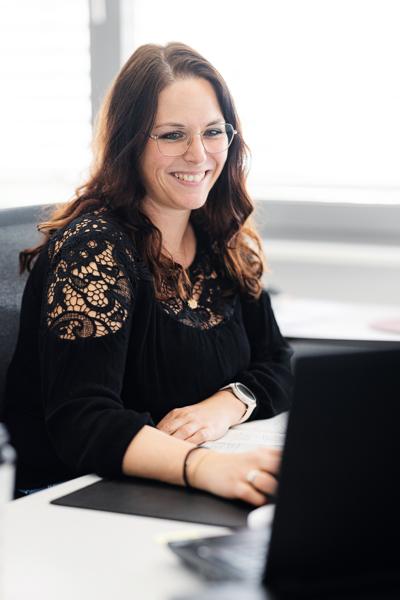
The proportion of women in various engineering positions distinguishes the technical departments at Legelshurst, making up 20% of the workforce.
A key innovation at home in Legelshurst is the EAF Quantum. Showcased at METEC in 2019 in LEGO® format, the EAF Quantum continues to break boundaries.
Placed throughout the building, employees are reminded of the awards and prizes, including environmental awards, granted to the teams working on new solutions.
An International Mindset
“An international mindset is part of our DNA, so we make a point to go to our customers wherever they are,” underlines Matt Clayton, who joined our discussion. Having relocated to Legelshurst in December of 2024 from the UK, Clayton is intimately aware of the value of being close to experts and gaining firsthand experience with technologies. “A key focus for our services is simple: we want to be there for our customers and see their equipment operating at its full potential.”
Clayton went on to explain the specific mechanical and automated solutions developed to improve maintenance and safety conditions surrounding the electric arc furnace, including tap hole filling and automatic tap hole openers. With an increased focus on electric arc furnace-based meltshops, Primetals Technologies is there to provide new solutions and effective component management to keep maintenance activities efficient. But Clayton directed my attention to two colleagues who can share with me their perspective.
Lisa-Maria Braun is a member of the services team and is responsible for the spare parts provided from Legelshurst, including cylinders, electrode arms, furnace roofs, as well as rebuild projects for electric arc furnaces, plug-and-play technologies, such as the Melt Expert, and training. Her colleague, Marvin Demmert, is a service engineer who travels regularly to customers, providing support and consulting on services and maintenance topics. “The knowledge we can provide to customers on-site is invaluable,” stated Demmert, “Being on-site also gives us crucial information.” Braun pointed out that spare parts and upgrades, such as the RCB and RCB wall panels, are critical to allowing existing electric arc furnaces to overcome limitations and meet growing demands.
Success Through Continuous Exchange
After speaking with colleagues from services, I was met by Joerg Schwoerer, Head of Sales for Electric Steelmaking at Primetals Technologies, and we quickly addressed the topic of international culture at the company location. “Legelshurst is international by default. Not merely because of its proximity to France, but also the interconnectedness with the company location in Linz.” As part of the sales team for electric steelmaking, Schwoerer often travels internationally and emphasizes the strength of collaboration between all the locations from Primetals Technologies to provide the best possible service and solutions to customers.
After more than 40 years of service with the company, Patrik Zipp explained that Legelshurst has always delivered engineering expertise since its beginnings with Gerhard Fuchs. As Head of Project Management, Zipp reiterated Schwoerer's comments and voiced how the working approach of Legelshurst in collaboration with other locations from Primetals Technologies reflects crucial cooperation for major projects. Both Schwoerer and Zipp explain that collaboration is a part of day-to-day operations in Legelshurst, where projects are seen as a team effort from sales meetings to pre-engineering and through to execution and services thereafter. Each department works closely together, just as Legelshurst does with its international locations and engineering partners, which is key to delivering excellent solutions in electric steelmaking and secondary metallurgy.
Heading out from our meeting, Schwoerer introduced me to his colleague Manidipa Bose. Bose recently moved to Legelshurst and joined the company. Learning a bit about her history working in both the non-ferrous and the steel sector, she shared with me her perspective on trends in the steel industry. “In non-ferrous,” she explained, “environmental topics are often an immediate part of the sales process due to the nature of the by-products of the non-ferrous industry. This is now becoming standard for steel producers as sustainability increases in importance.” We continued our conversation as she accompanied me to meet one of the minds behind the electric arc furnaces developed in Legelshurst, Michel Hein.
Transforming Electric Steelmaking
Michel Hein recognized me from our previous conversations around the EAF Quantum, and he’s happy to meet me in Legelshurst. Hein shared that there is a spirit of innovation that continues in Legelshurst that began with a focus on finger-shaft-based furnaces from the 1990s. This became the core of the EAF Quantum, shaft-based electric arc furnace.
“Before the development of the EAF Quantum,” Hein explained, “there was a need for producers to have a high-powered and high-capacity electric arc furnace, which became the EAF Ultimate.” Hein shared that these solutions have the potential to transform steel production worldwide and transition the industry toward more sustainable practices. As the next generation of engineers is already starting work at Primetals Technologies in Legelshurst, new developments that push electric arc furnaces and secondary metallurgy to the next level to meet customer demands are already in progress.
Advancing Metallurgy
As my conversation with Hein continued, Deniz Catan, Head of Technology & Innovation, joined the conversation. “These advancements assist steel producers with their production routes, such as the CVL (Combined Vessel Lift) system for vacuum treatment logistics, and we are also developing better predictive models for electric steelmaking and secondary metallurgy to track the properties of the liquid steel.” It is rare to see Catan on-site at Legelshurst as he is often traveling to steel producers worldwide.
“We often try to meet producers where they are. This also helps us gain insight into their existing production routes and truly get a feeling for their individualized needs,” Catan noted. He also emphasized that this is strengthened by the teamwork amongst colleagues at Legelshurst who can provide additional information, while colleagues are on-site elsewhere. “We all see ourselves as a team, striving to meet the needs of steel producers worldwide.” He explained how essential all of this is to a changing landscape in the steel industry with greater emphasis on environmental impacts and regulations.
As more routes shift toward electric arc furnaces, secondary metallurgy will also experience a shift and help producers of specific steel grades. Additionally, this may introduce new processes for producers. Given Legelshurst's decades of experience in both electric steelmaking and secondary metallurgy, it is an exciting time to be at the company location. “There is a lot of work to be done, but we are excited to support an industry-wide transformation toward sustainable steel.” I bid farewell to Catan and Hein, then made my way toward the project management team once more.
Collaborating for Decades
As one navigates the cubicles among colleagues from project management, purchasing, sales, services, and engineering, a palpable sense of energy fills the air. Whilst colleagues are laser-focused on their tasks, they simultaneously take a moment to look up from their screens to give a friendly hello, and, knowing that I was just visiting the location, asked quickly if they could assist with anything. With this type of atmosphere, it is no surprise that they feel their role nd take pride in supporting an industry-wide transformation, just as they support one another each day.
With a knock on the door, I met with Oskar Hutter, Head of the Legal Department, an Upper Austrian native who has been coming to Legelshurst from Linz for over 20 years. With an Upper Austrian greeting, one feels right at home as I inquired what has changed at Legelshurst. “I think it may be more about what has always stayed the same,” Hutter remarked. “When I came to Legelshurst, it was to oversee the paperwork as ‘Fuchs’ joined the Siemens VAI (predecessor company to Primetals Technologies) ecosystem. I can tell you that over the past 20 years, Legelshurst has never stopped having a collaborative mindset.” Feeling right at home in Germany at the company location, the Austrian native explained that there was always an openness to working together, which is partly why he is more than happy to have split his time between Austria and Germany.
Electrifying the Industry
As my visit ended, I finally met with Sascha Becker, Head of Electric Steelmaking at Primetals Technologies Germany, and I shared many of the impressions I gained from meeting with various members of the Legelshurst team: The international, collaborative spirit is electrifying, and their passion is driving their engineering projects. “We try our best to remain grounded and keep our perspective fresh,” Becker shared. He expressed his pride in seeing members of younger generations shifting perspectives on conventional ideas, whilst simultaneously learning all they can from engineers and experts with decades of experience.
“We are leaders in electric steelmaking, and we maintain this through our culture of collaborative exchange and teamwork,” Becker said. He also stated that he’s pleased to see the collaboration with other Primetals Technologies locations further increase, as each location brings different perspectives and cutting-edge technologies to advance the furnaces engineered from Legelshurst. “Our collaboration with colleagues from Erlangen, Germany, on the Active Power Feeder has supported the adoption of the EAF Ultimate. This collaboration means that producers can integrate our high-powered furnace into their production with little disturbance to the electrical grid and with stable performance on the furnace side.”
As our conversation continued, I noticed how often Becker refers to Legelshurst as a collective. It is a group effort, a team effort—everything that comes into contact with this location. Steel producers worldwide experience shared expertise, reliable consulting, and hands-on training. Colleagues from other locations also benefit from the same supportive and collaborative spirit. At the location itself, individuals throughout the building, working on various projects in various stages, labor diligently and reliably, knowing they have a supportive team surrounding them.
Looking back at my visit, it was striking how the culture and atmosphere at Legelshurst revolved around a unified effort to transform the industry. Answering the questions, needs, and challenges of producers transitioning to electric steelmaking and delivering precision technologies, the legacy of innovation continues with new team members joining those with years of experience. Above all, through teamwork and collaboration, Legelshurst is truly electrifying the industry.
Experiencing the Location
Originally constructed for METEC 2019, the LEGO® EAF Quantum is a permanent part of the entrance foyer at the company location in Legelshurst. The small model is a replica of the massive and groundbreaking innovations being engineered in-house and reminds colleagues that sometimes a playful shift in perspective can transform an industry.
Although most often associated with fairytale villages, Legelshurst, Germany is fraught with “Fachwerkhäuser,” showcasing one of the most traditional forms of German architecture. It is striking how quiet and calm the nearby town is, close to the company location, where highly advanced mechanical and digital solutions are being developed and engineered in such an idyllic setting.
Legelshurst is home to 127 employees from Primetals Technologies representing 13 different nationalities. The location is proud of the high percentage of women in engineering and technical roles. Recently, 16 new colleagues joined a robust team in the past 12 months to support the electrification of the steel industry worldwide.
Placed along the open stairway are reminders of the legacy of Fuchs Systemtechnik. Among them are photos from 1969, including an advertisement and presentation of the completion of a 160-centimeter- diameter pipe. Proud of their legacy and with the original manufacturing building just a little over 100 meters away, colleagues at Legelshurst often reflect on past innovations and successes, when preparing for the future.
The new building and atrium in Legelshurst welcomes customers, colleagues, and stakeholders from around the world. Walking into the location, one immediately notes the buzz of intensive engineering activities at work in the building and the feeling of a transforming industry.