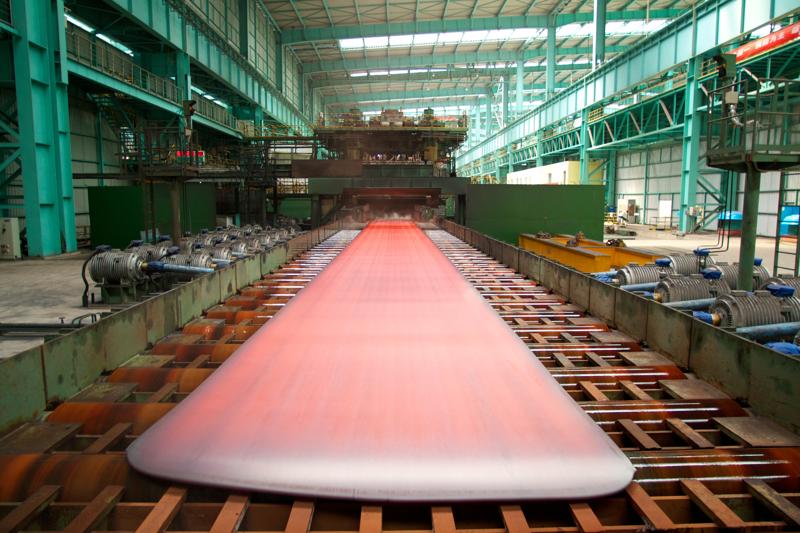
Plate Mills: Delivering Metallurgical Precision
Plate mills deliver geometric accuracy, flatness, and enhanced mechanical properties for a wide range of products. The plate-rolling process affords great flexibility in terms of achieving final structure property relationships through a combination of alloying, material working, and accelerated cooling strategies. Accurate microstructure control is underpinned by expert knowledge of the process. Primetals Technologies has combined this knowledge into its process automation system and mechanical equipment to deliver exacting through-process performance.
Primetals Technologies has completed over 70 plate mill projects since 2000, including new full lines, mechatronic packages, and significant modernizations. Primetals Technologies recognizes the importance of delivering enhanced productivity and mechanical property performance from a stable and consistent process. The company collaborates closely with customers to develop the most cost-effective plate mill solutions tailored to their specific needs. Modernization packages are tailored to meet customer objectives, ranging from process studies to full mechatronic upgrades. Reducing processing costs, minimizing environmental impacts, and improving sustainability are key drivers embedded in our solutions for both new and modernized plate mills.
Plate Mill Equipment from Primetals Technologies Consists of
- Roller tables
- Primary and plate mill stand descaling systems
- Roughing and finishing plate mill stand (according to throughput)
- Vertical edger (according to the process requirements)
- Intermediate plate cooling to improve productivity
- Pre-leveller
- MULPIC® accelerated cooling and direct quenching
- Hot plate leveller
- Hydraulic hot divide shear (optional)
- Cooling beds (mechanical or fully hydraulic)
- Rolling cut double-sided trimming shear(s)
- Rolling cut slitting shear(s)
- Rolling cut cropping and dividing shear(s)
- Cold leveller, specifically designed for operational flexibility in terms of gauge and strength combinations.
- Studies
Roller Tables
Roller tables are a critical component in any plate mill, serving as the primary mechanism for transporting heavy steel plates through various processing stages with precision, speed, and stability. Designed to withstand extreme loads, temperatures, and continuous operation, they play a key role in maintaining product quality, production flow, and overall mill reliability. Roller tables enable precise plate positioning, stable transfer between mill stands, and consistent handling, all of which contribute to improved throughput and operational safety. Roller tables incorporate high-temperature-resistant rollers, robust drive systems, and structural frames engineered to endure continuous operational stress. Their ability to provide smooth transportation, controlled speed regulation, and stable plate support helps maintain both dimensional accuracy and surface quality during rolling operations. When existing roller tables begin to show signs of wear or reduced efficiency, targeted upgrade packages can deliver substantial benefits. Replacing outdated frames, rolls, and drive components with modern, high-performance parts enhances durability and reliability, reduces maintenance requirements, and minimizes unplanned downtime. These upgrades not only extend equipment lifetime but also help increase throughput and improve the overall return on investment.
Plate Mill Descaling System
The surface quality of the rolled plate is an increasingly important demand from plate mill customers. Primetals Technologies supplies descaling systems that deliver industry-leading surface quality, utilizing sustainable and maintenance-friendly solutions. An optimized header design and automatic height adjustment enable the target impact pressure to be achieved while reducing both energy and water consumption. Variable-speed pump drives drastically reduce energy consumption and improve equipment longevity. For mills seeking to enhance existing lines, descaling modernizations provide a highly effective way to improve surface quality and operational efficiency. Targeted upgrade packages, such as improved nozzle designs, optimized pump systems, and easy-access headers, enable mills to reduce maintenance, extend equipment lifetime, and access premium markets through consistently high-quality output.
Roughing Mill and Edger
Roughing mills play a key role in increasing plant utilization by distributing rolling passes across mill stands when configured with a plate finishing mill. They also serve as backup units during maintenance, supporting continuous production. For applications requiring tighter width tolerances and improved yield, Primetals Technologies offers edger designs tailored to all mill sizes and rolling demands. Modernization of the roughing mill and edger, through upgrades such as advanced hydraulic Automatic Gauge Control (AGC) systems, enhanced width‑control technology, and improved descaling integration, enables mills to achieve greater rolling stability, higher dimensional accuracy, and more reliable overall performance across the production process.
Intermediate Plate Cooling
Intermediate cooling is an efficient solution designed to boost the performance of plate mills by reducing hold times between rolling stands and increasing overall throughput. Positioned between the roughing and finishing stands, the intermediate cooling unit delivers precise, controlled cooling using stainless‑steel top and bottom headers, side‑sweep sprays, and air blow‑offs. This ensures accurate temperature management across each plate, resulting in more consistent mechanical properties and improved product quality. With automated control of cooling intensity through Level 1 and Level 2 systems, the process becomes highly reliable and repeatable. By shortening processing cycles and optimizing temperature uniformity, intermediate cooling not only increases productivity but also supports the production of advanced steel grades while reducing energy. Modernization of your mill, including intermediate plate cooling, is a cost‑effective way to unlock higher output, greater flexibility, and better product performance from existing mill equipment.
Plate Mill Stand
Robust single or multi-piece plate mill housings are selected to meet the needs of each unique project. A multi-piece "bolted" housing is typically used to enhance logistical solutions and reduce the capital costs associated with installation. A single-piece housing is often more favorable for mill modernization projects.
The bottom-mounted hydraulic automatic gauge control (HAGC) provides plan view pattern control (PVPC) to maximize plate rectangularity, thereby increasing yield. Accurate HAGC enables taper rolling for longitudinal plate profile control, aiming for a final near-net shape in specific plate applications.
SmartCrown work roll shifting seamlessly integrates with work roll bending to enhance plate profile accuracy and improve plate flatness. Higher reductions per pass enhance productivity and improve the quality of thin plates by avoiding low final rolling temperatures. This equipment features a robust mechanical design, ensuring that actuators are isolated from the forces generated during rolling.
A high-torque drive train using either a universal joint spindle solution for standard applications or for the most demanding processes, a unique design of slipper spindle. This design enables the use of a solid and robust single-piece shaft, while all joints are equipped with recirculating lubrication, ensuring a "no-loss" and environmentally friendly system.
An attached vertical edger with short stroke control provides enhanced width tolerances and yield, which is especially beneficial for mill-edge plate products. For ingot rolling, Primetals Technologies can supply an edger with an increased edging load.
A direct backup roll transfer to the roll shop reduces the capital cost associated with cranes and building infrastructure.
Existing plate mills can be upgraded with advanced mechanical and automation solutions from Primetals Technologies. These upgrades enable higher rolling loads, increased torque, and the ability to roll wider plates, reducing passes and boosting throughput. Targeted enhancements improve flatness and geometric consistency. Typical upgrades include HAGC capsules, screwdown systems, roll bending, redesigned rolls and bearings, spindle systems, and motor drive replacements.
Accelerated Plate Cooling
MULPIC® (Multi-Purpose Interrupted Cooling) is the world-leading plate cooling technology. Its extensive flow control capability (20:1 water flow density range) enables a wide variety of cooling strategies, from direct quench (DQ) to make abrasion-resistant grades, through accelerated cooling for pipeline and structural steels, to light cooling for reducing residence time needed on the cooling bed. This capability allows for the achievement of "near-net mechanical properties" directly after hot rolling, providing a cost-effective means to enhance the final quality and product range of a plate mill. The cooling header design, combined with actuators that control cooling along the plate's length and width, reduces residual stress and improves flatness compared to conventional spray and laminar systems. High cooling rates lead to alloy cost savings, as well as enhanced toughness and weldability. Modernization and upgrade options for MULPIC®, including modular header replacements to advanced digital control enhancements, enable existing plate mills to significantly boost performance, extend equipment life, and produce higher‑value grades with minimal disruption.
Levellers
Levelling equipment provides significant advantages in plate processing by reducing residual stresses and correcting flatness defects. Various types of levellers are available. A pre-leveller coupled with a MULPIC enhances the cooling process, particularly for plates with header and tail turn-up or turn-down, while a cold leveller is ideal for meeting very tight flatness requirements or for plates that require rectification of flatness problems.
Crop, Double Side Trim, Slitting, and Divide Shears
Rolling cut plate shears deliver high precision cutting performance by operating with minimal blade overlap, resulting in superior plate-edge quality and highly accurate geometries. When paired with crop optimization, crop shears play a crucial role in maximizing material yield by ensuring clean removal of head and tail ends during processing.
For high-volume operations, Double‑Sided Trim Shears (DSTS) offer outstanding throughput, capable of achieving up to 30 cuts per minute, while maintaining consistency and dimensional accuracy.
Slitting shears further enhance production efficiency by enabling double‑width rolling and precise width adjustments that significantly increase mill output and improve material utilization.
Shear systems play a vital role in achieving reliable, high‑quality plate production. As shear lines age, their performance naturally declines, often resulting in increased scrap, reduced accuracy, and unnecessary downtime. Modernization and upgrade packages from Primetals Technologies provide mills with a practical, strategic way to restore cutting precision, boost yield, and enhance capability, ensuring shear lines remain fully aligned with today’s production demands and material requirements.
Studies
Primetals Technologies offers comprehensive studies to support new installations and modernization projects. These include process simulations, mechanical evaluations, site surveys, 3D scanning, laser alignment, and non-destructive testing (NDT). Each study delivers a detailed report with upgrade recommendations and investment options. Studies are often followed by a commercial offer for the selected options, enabling informed decision-making focused on production, technology, investment costs, and project execution.